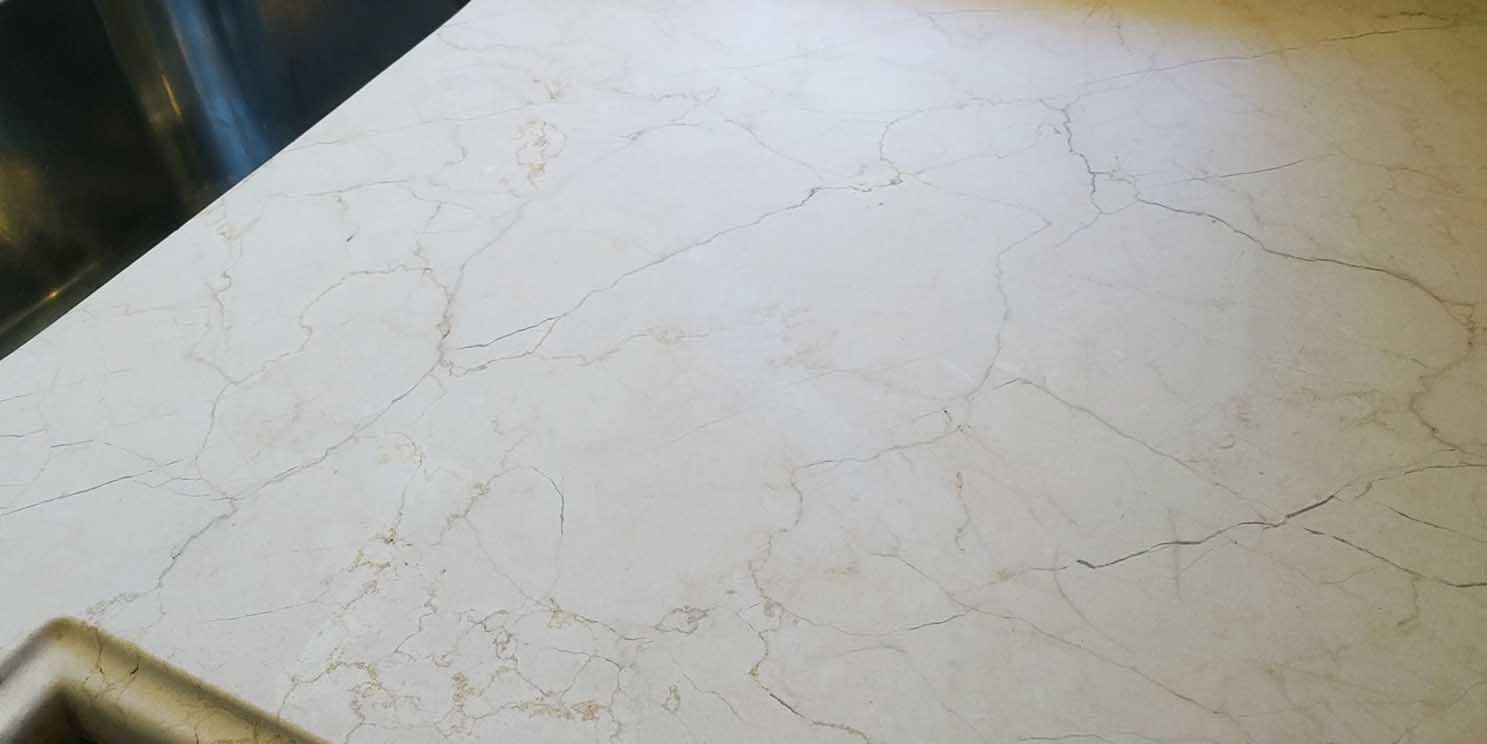
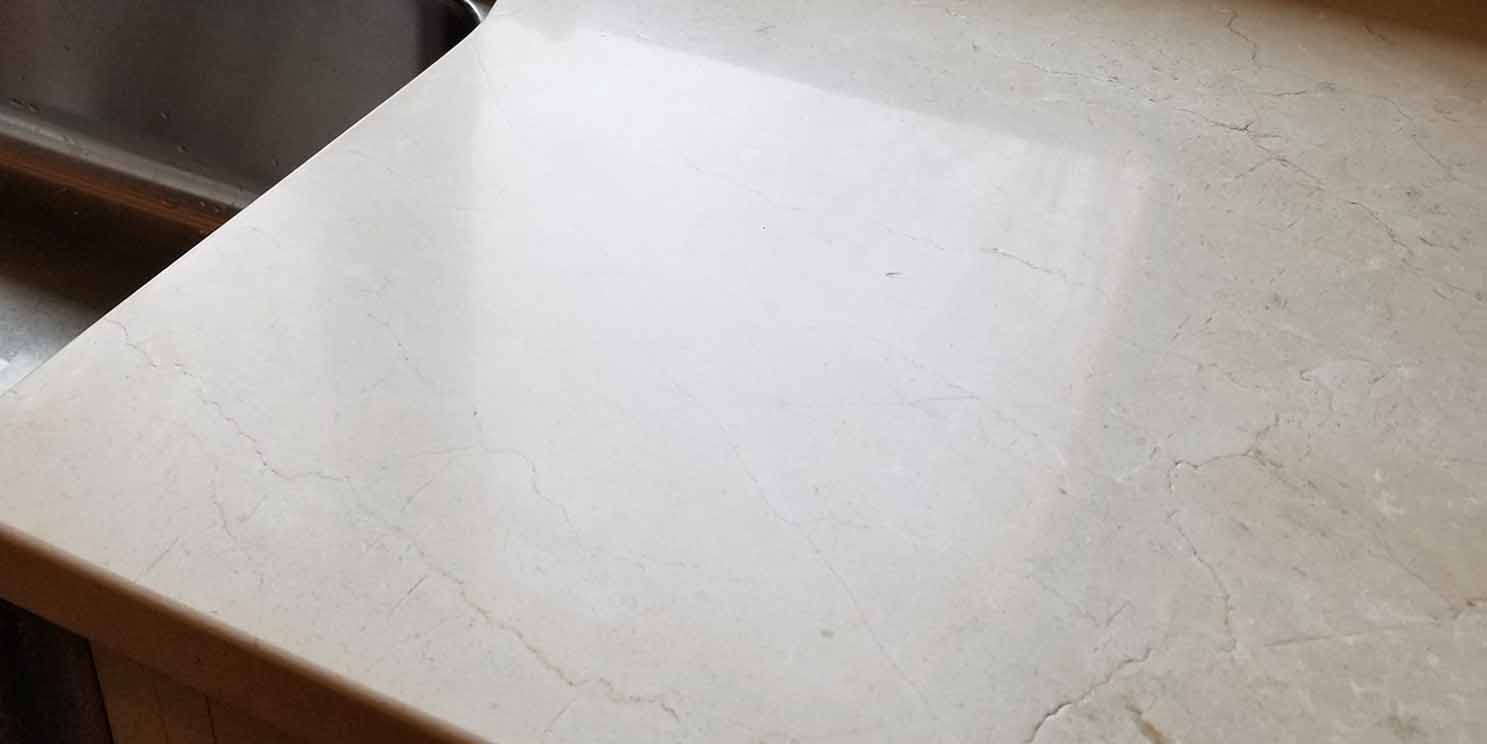
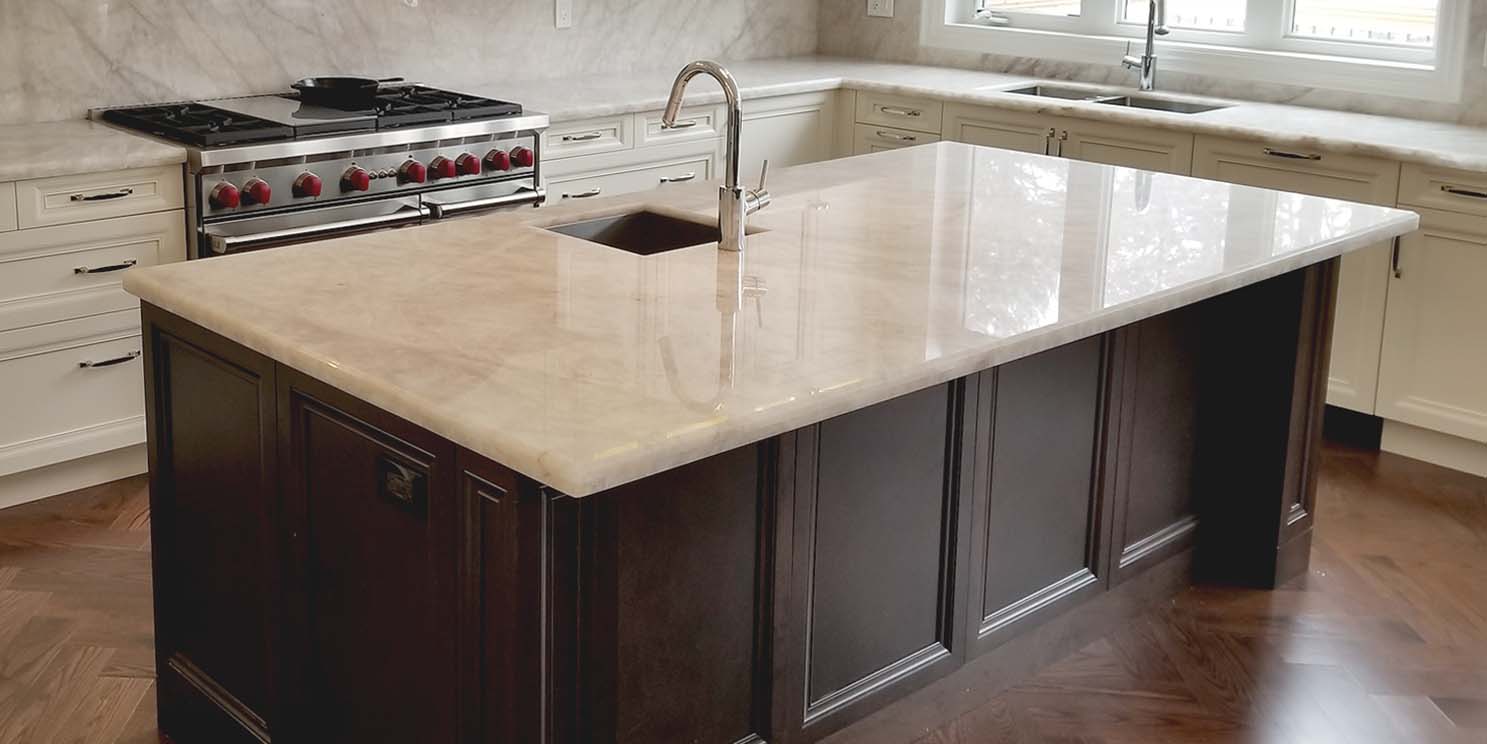
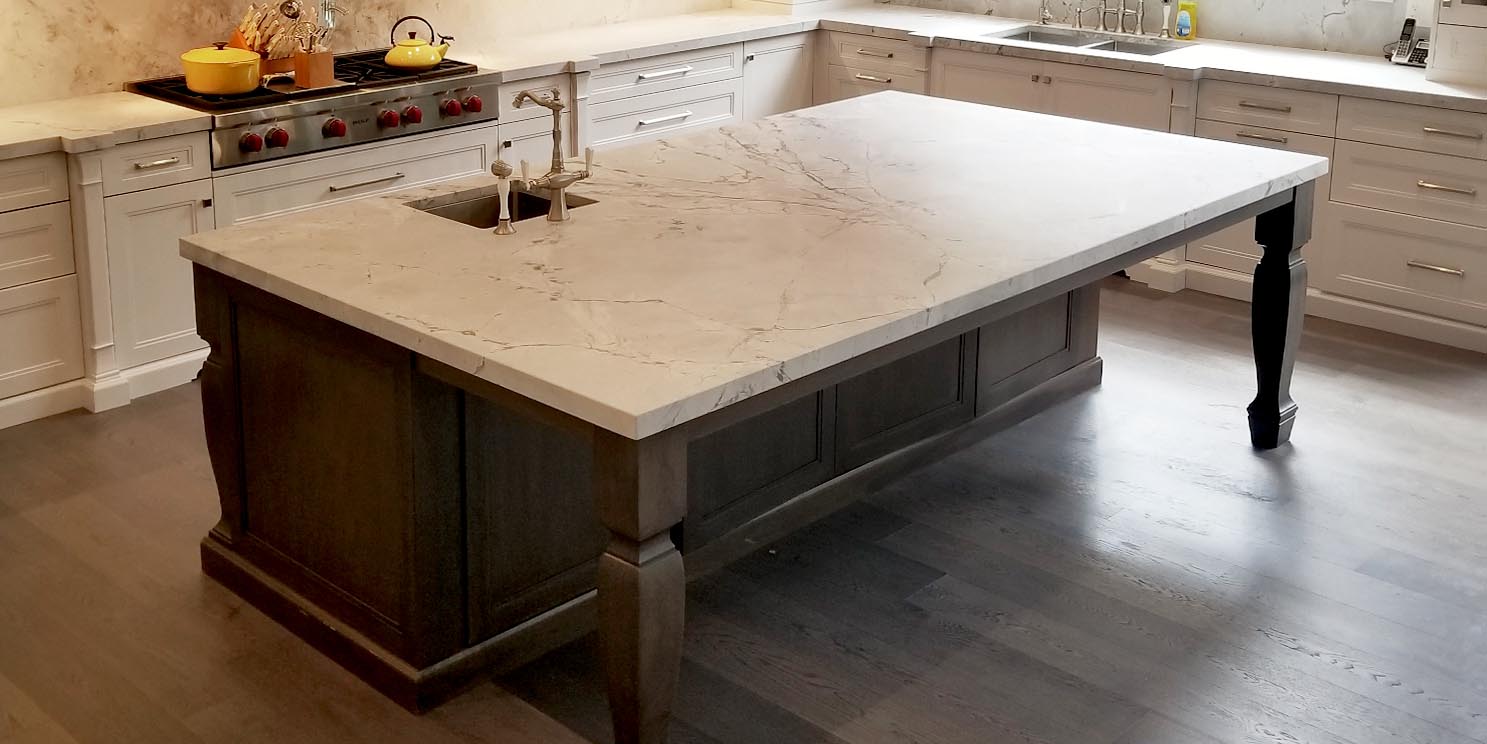
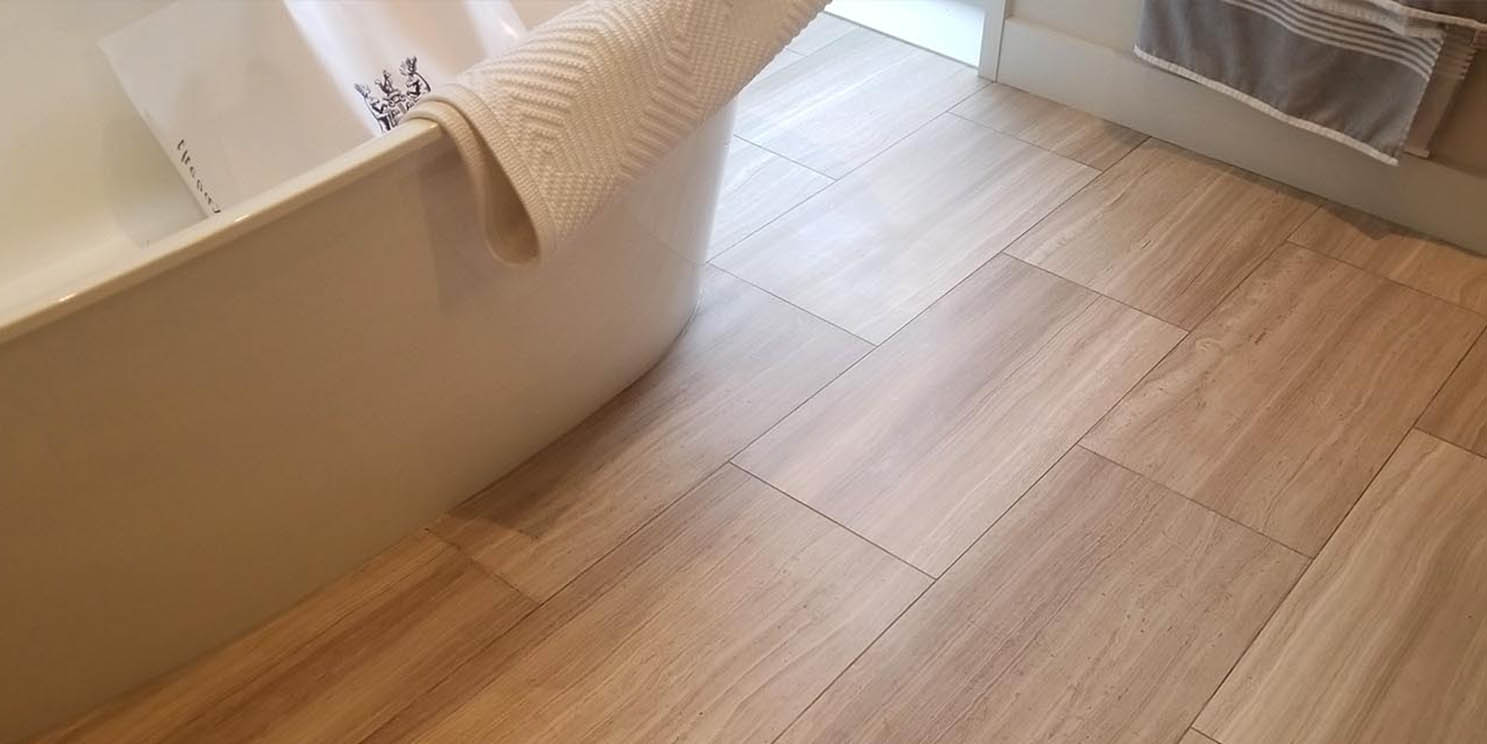
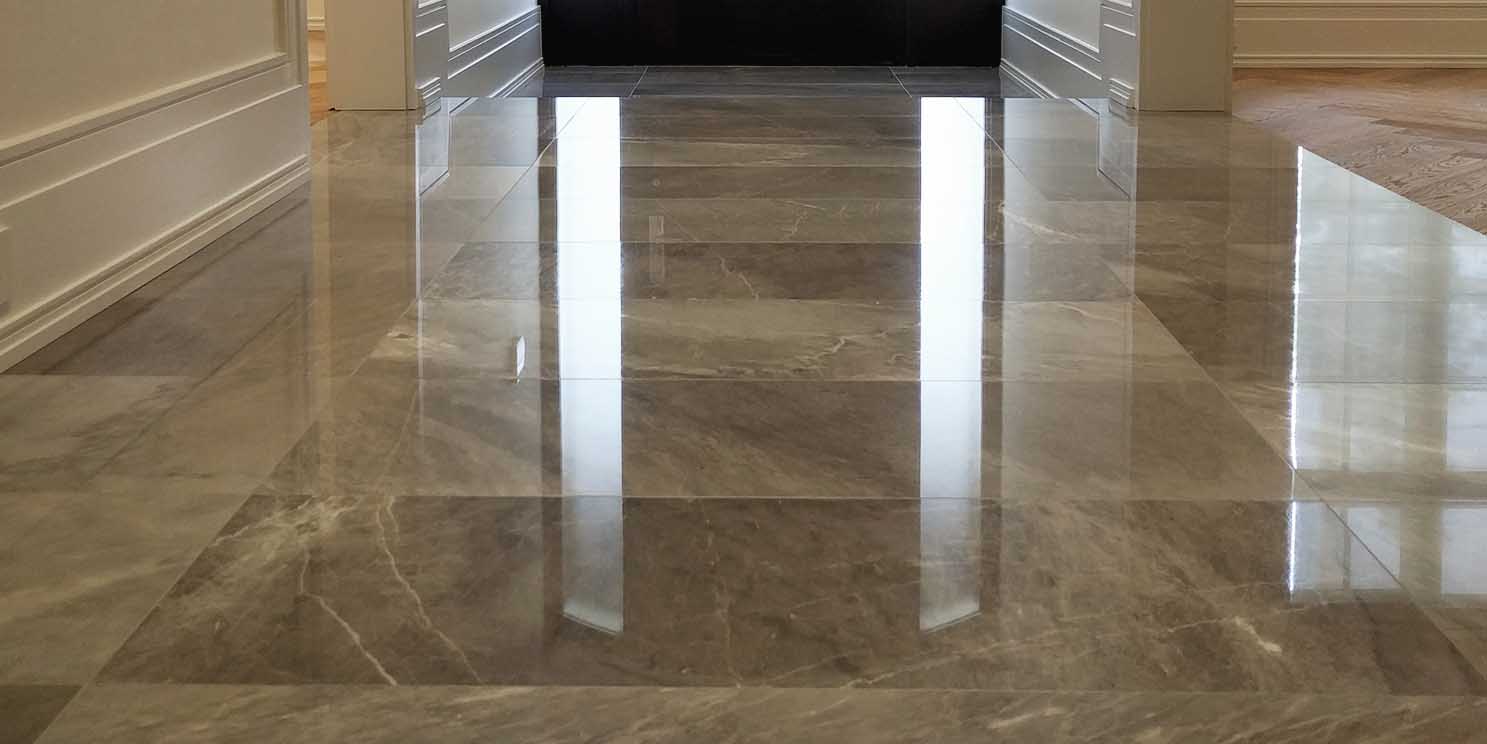
The major advantage of a honed finish on marble and other acid-sensitive stones is not that it prevents etching, but that etches are usually much less obvious. A dull or softly reflective surface creates less contrast between the affected area and the surrounding stone, which can make everyday wear substantially easier to live with.
Honing also changes how the stone itself is perceived. Without a strong surface reflection, variations in colour, veining and mineral structure can become more prominent. This makes honed finishes particularly attractive on countertops, tables, showers and other areas where a softer, quieter appearance is desired.
On floors, the appropriate level of hone depends heavily on the material and traffic. Very dull finishes can develop smoother, more reflective traffic paths as repeated foot traffic gradually burnishes the surface. They may also show embedded dirt or abrasion differently in busy areas. For that reason, we often move toward a smoother Patina finish on higher-traffic floors rather than leaving the stone at an extremely dull hone.
Patina sits between a conventional hone and a full polish: the surface develops a gentle satin reflection while remaining intentionally diffused rather than optically clear. Limestone, travertine and many softer stones respond particularly well to this treatment, while some dense marbles can perform beautifully either polished or honed depending on the application.